
Short Articles
Short-form pieces on decision-making and argument. One idea each, five to seven minutes — published here first, then shared across our social channels.

You Make 35,000 Decisions a Day. Nobody Ever Taught You How.
People guess they make about 15 food decisions a day. The counted number is 226 — for food alone. Widen the lens and the total is around 35,000. You can't get better at something you can't even see.
Read article
The Simple Frameworks That Make Decision-Making Easier
Most bad decisions don't come from being dumb. They come from having no method — so you default to whatever's loudest or most urgent. Four frameworks that fix that: Type 1/Type 2, regret minimization, the Eisenhower Matrix, and SPADE.
Read article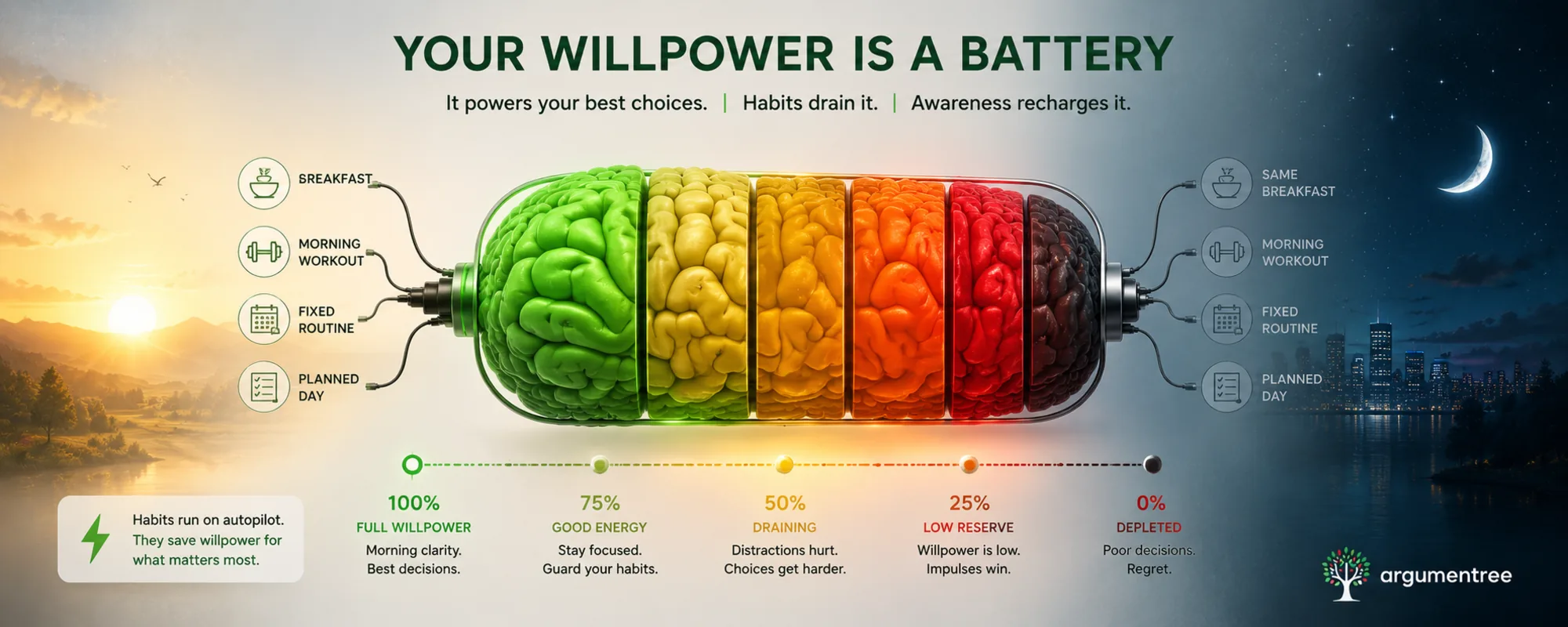
How to Actually Get Better at Making Decisions
You can know every framework and still blow the call at 11pm when you are fried, because willpower runs out and systems do not. Four habits that make good decisions your default.
Read article
The Meeting Where Groupthink Killed 7 Astronauts
On a cold night in 1986, engineers begged NASA not to launch Challenger. They had the data. They were right. Then a manager said: take off your engineering hat and put on your management hat.
Read article
Every Argument Has 3 Parts. Most People Only Use 1.
Claim, evidence, reasoning. Most people state a claim, skip the other two, and repeat it louder. The part that goes missing almost every time is the reasoning — which is exactly where disagreements secretly live.
Read article
Why the Best Argument Doesn't Always Win
The person with the better facts and tighter logic often loses the room. Aristotle explained why 2,300 years ago: persuasion runs on three engines, and logic is the last one people process — not the first.
Read article
"Let's Take This Offline" Is Killing Your Decisions
The four most productive-sounding words in any meeting. They are also where decisions quietly go to die — no owner, no record, and no reason anyone can remember later.
Read article
How to Disagree Without Destroying Relationships
Most people have two settings for disagreement: avoid it, or go to war. There is a third — challenge the idea while protecting the person — and it is a learnable skill.
Read article
Why Smart Teams Make Dumb Decisions (And the One Thing That Reverses It)
Groupthink, the loudest voice, the HiPPO effect, conformity cascades. But the same group, structured right, beats every individual in it. The one lever that flips it.
Read article
The Hidden Cost of Undocumented Decisions
Your team made a decision three months ago. Why did you decide it that way? If you cannot answer, you have decision debt — and like technical debt it stays invisible until it is expensive.
Read article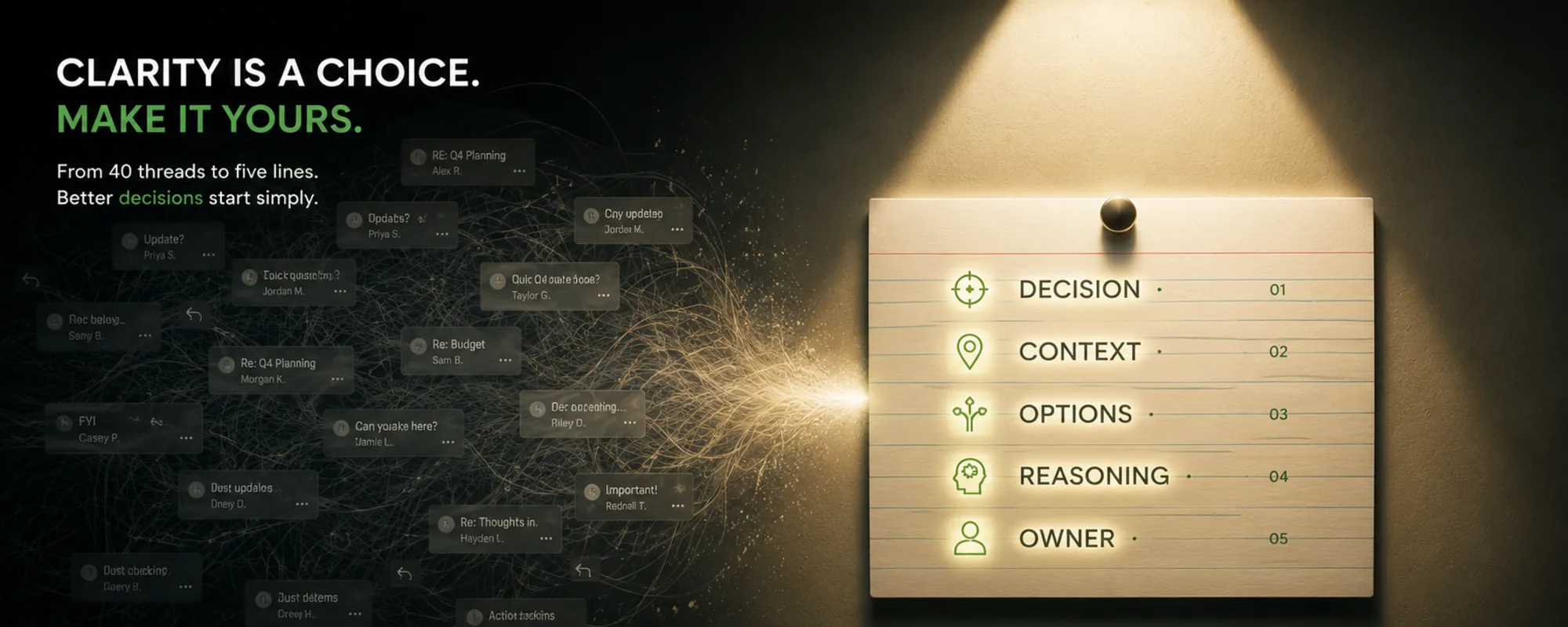
The Decision Record: How to Decide Once and Never Re-Argue It
A five-line artifact written at the moment of deciding, capturing not just what you chose but why. Two minutes to write; roughly two hours saved every time the question comes back.
Read article
2,500 Years Ago, Aristotle Figured Out How to Win Arguments
He treated persuasion as a craft rather than a gift — something with structure, parts and rules that you could get good at on purpose. We have never improved on the core of it.
Read article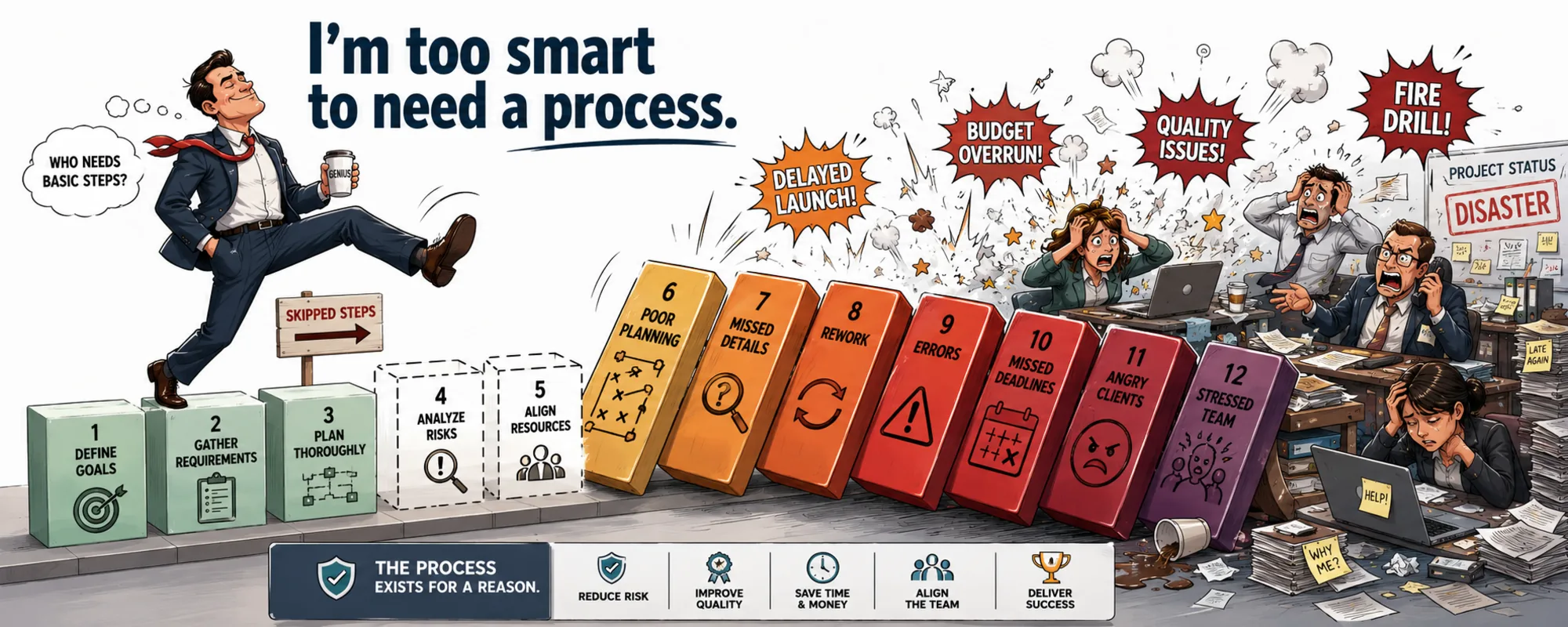
Why Smart People Make Dumb Decisions
Intelligence is a better engine for rationalizing what you already wanted to believe. The three traps that catch clever people — and the two things intelligence quietly erodes.
Read article
The Regret Minimization Framework
In 1994 Jeff Bezos had a great job and a crazy idea. The expected-value math was a mess, so he used a different tool: project to 80, look back, and ask which choice you would regret not making.
Read article
The Cognitive Bias That Destroyed Kodak
In 1975 a Kodak engineer invented the digital camera. Management said: interesting, but do not tell anyone, it does not use film. In 2012 Kodak filed for bankruptcy.
Read article
The Pre-Mortem: How to Kill Bad Ideas Before They Kill You
A ten-minute exercise that flips the post-mortem backward, turns doubt into the assignment, and surfaces the disaster while you can still prevent it.
Read article
The Psychology of Sunk Cost: Why We Throw Good Money After Bad
The half-eaten meal and the failing billion-dollar project are the same trap — and one question, asked out loud, is what breaks it.
Read article
This Meeting Could Have Been an Email
The meme is a diagnosis, not a joke — but swapping the meeting for an email just trades meeting chaos for thread chaos, because neither structure forces the arguments out.
Read article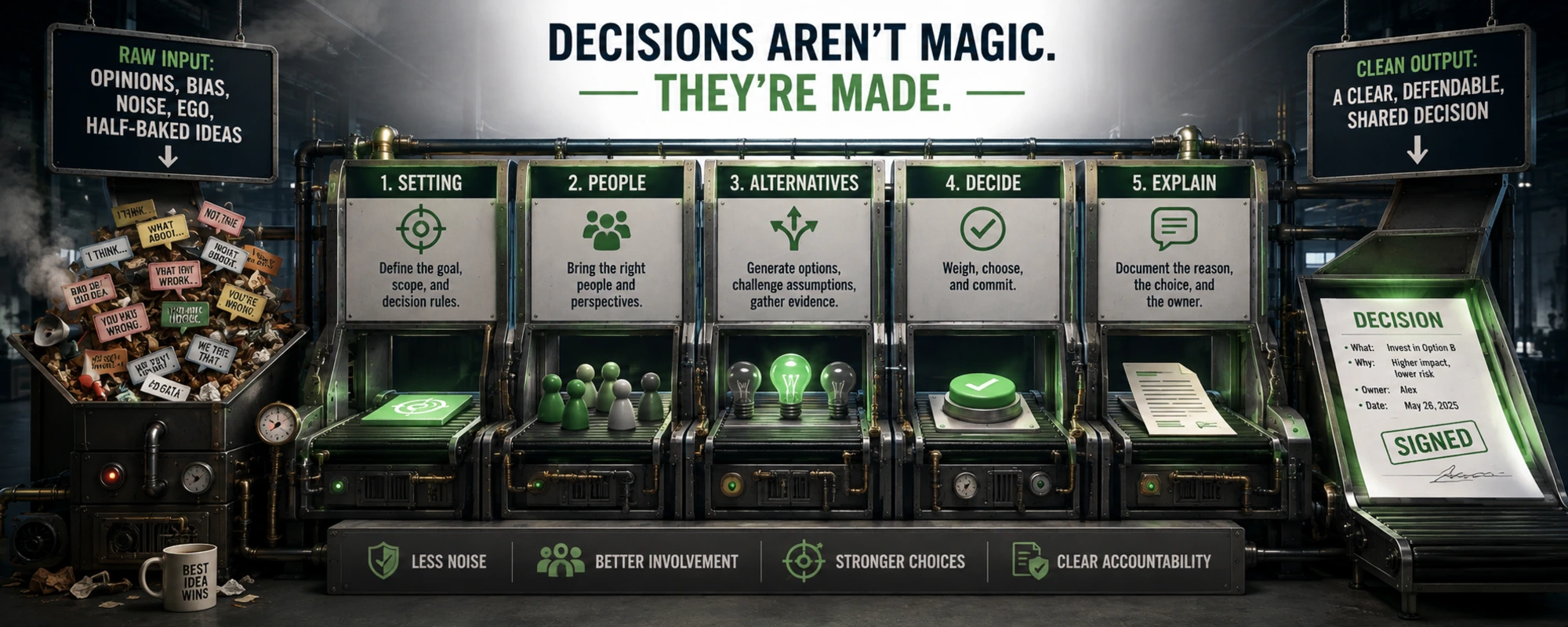
The SPADE Framework for Team Decisions
Setting, People, Alternatives, Decide, Explain — five letters that make a group decision explicit, so structure beats vibes and the best argument wins.
Read article
Decision Fatigue: Why Judges Grant More Parole After Lunch
The famous parole study says judges grant far more parole after lunch — but the case-scheduling critique and the collapse of ego depletion mean it is an illustration, not proof.
Read article
You're Trying to Win the Argument. That's Why You Keep Losing.
There are two completely different games called arguing — and the moment your goal is to win, you have started playing the one where almost everyone loses.
Read article
Steel-Manning: How to Make Your Opponent's Argument Better Than They Can
Before you argue against a position, rebuild it stronger than its owner did. The most disarming move in any disagreement — and the one almost nobody uses.
Read article
The 7 Principles of Persuasion (And How to Defend Against Them)
Reciprocity, commitment, social proof, authority, liking, scarcity — and unity. How each lever gets you to say yes, and the specific defence against each one.
Read article
The More Senior You Get, the Less Truth You Hear
Power comes with a hidden tax — the people around you quietly stop telling you when you are wrong, and the only fix is structure, not courage.
Read article
The Devil's Advocate Protocol: How to Systematize Dissent
The Catholic Church paid someone to argue against sainthood for 400 years — here is how to run the protocol, and the research finding that says assigned dissent is scaffolding, not the real thing.
Read article
Why Groupthink Is Worse Than Conflict
A team that never argues is not healthy — it is often one that has quietly stopped thinking, and silent risk is far more dangerous than loud disagreement.
Read article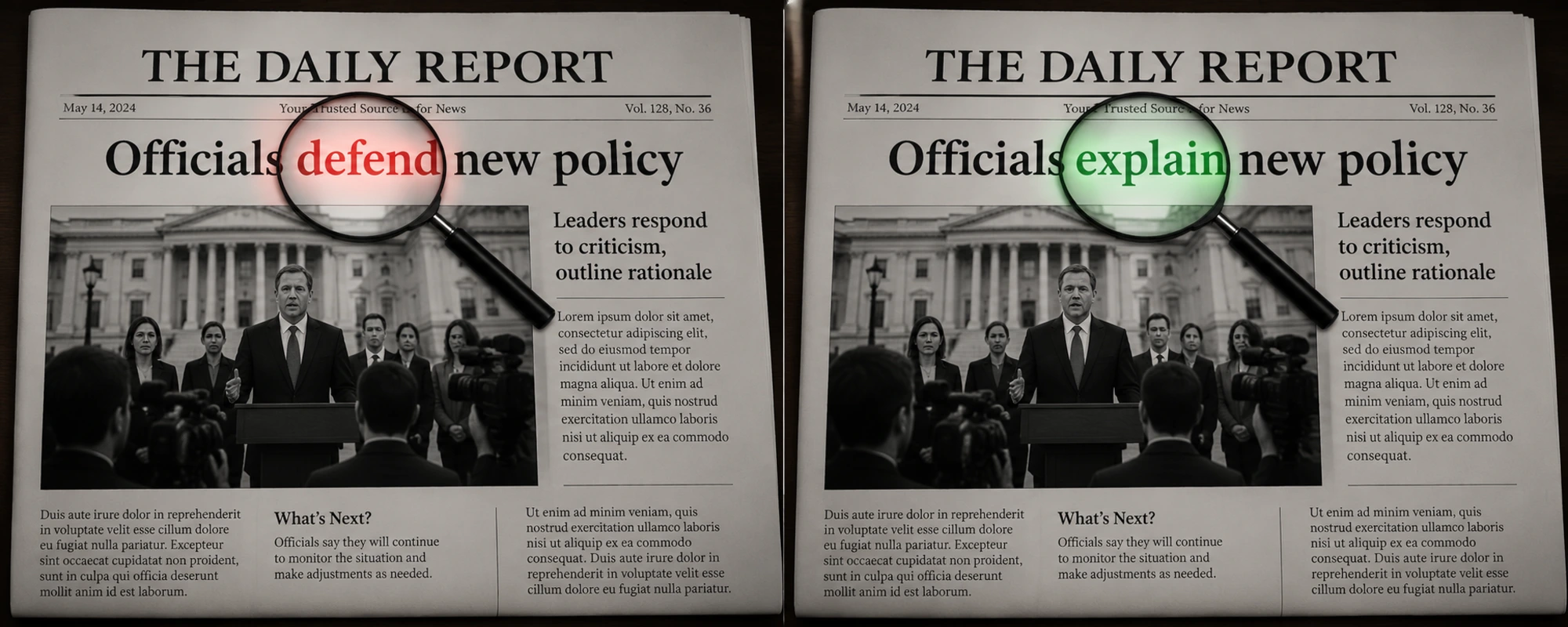
Every News Article Has an Argument. Most Readers Miss It.
Read article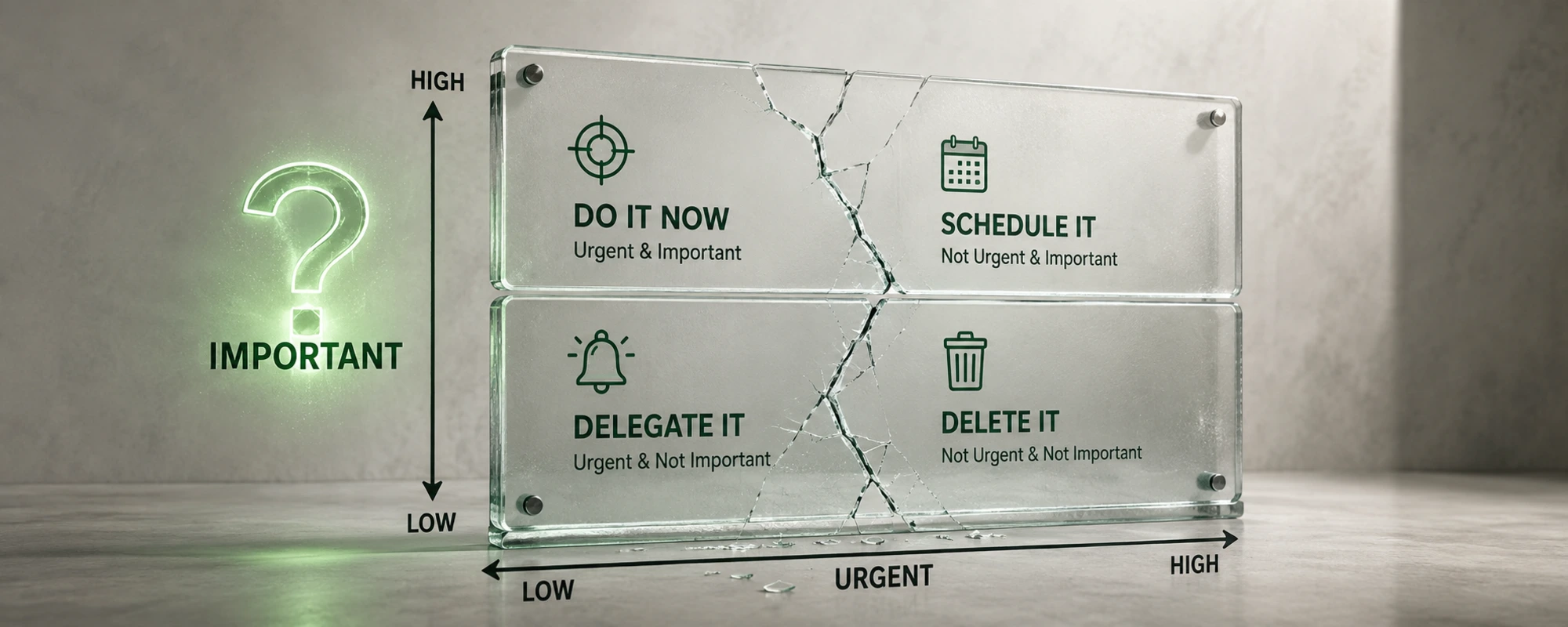
The Eisenhower Matrix (And When NOT to Use It)
The famous urgent/important grid is genuinely useful for protecting your important-but-not-urgent time. It is also quietly overrated: it sorts priorities without telling you what they should be.
Read article
Why Your Brain Thinks Plane Crashes Are Deadlier Than Cars
Mile for mile, driving is far more dangerous than flying — yet the fear runs the other way. The availability heuristic estimates likelihood by how easily an example comes to mind, and it fools whole teams too.
Read article
Put better reasoning to work
Structure the decision, keep the reasoning visible, and stop re-arguing what you already settled.
Start Free 14-Day Trial →